Pelvic Clock: Spinning
Click here to learn Pelvic Clock in detail. This post talks only about how this variation differs from the main exercise.
About This Variation
Spinning the clock is different from the other movement directions of the Pelvic Clock series as it keeps the face of the clock parallel to the ground and rotates the clock horizontally, thereby causing lateral flexion in the lumbar spine. You might know it as hip hiking. It is movement on the frontal plane.
Starting Position
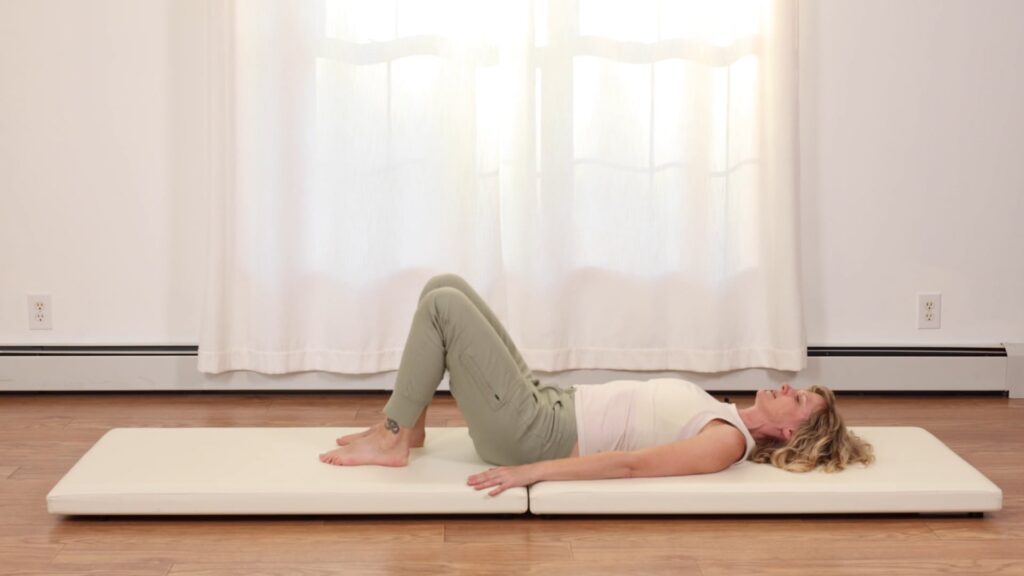
Lie on your back with your knees bent and your feet flat on the floor.
Relax your arms by your side.
Imagine the face of a clock lying on top of your lower belly. Your pubis is at 12 o'clock, your navel is at 6 o'clock. Your right hip bone is 3 o'clock and your left hip bone is 9 o'clock.
Movement Pattern
Move your right hip towards your right shoulder.
Return to center.
Move your left hip towards your left shoulder.
Return to center.
Movement Skills
Lateral Flexion of the lumbar spine
Analysis
As the lumbar spine laterally flexes to the right, your right hip joint adducts and your left hip joint abducts.
Your hip joints are in ~ 45 degrees of hip flexion throughout, due to the bent leg position.
Helps release tension from the muscles around your pelvis if you keep the movement gentle, and without effort.
Both lower extremities are in a closed-chain environment.
Balances your pelvic floor muscles.
Contraindications
Late-stage pregnancy | Lying supine for an extended duration is contraindicated.
Precautions
Acute spine or disc pathologies | Perform as tolerated.
Scheuerman's disease and hyperkyphosis | Use a wedge, C-shaper, or baby arc to support your shoulders and head. If there is uncomfortable pressure on your thoracic spine, use some softer cushioning.
Lower Extremities
Keep your feet in the same spot throughout.
Keep all 4 corners of the feet on the mat.
Bend your knees about 100 degrees.
Torso + Pelvis
Keep equal distance from your lower ribs to your hip bones (neutral spine position on the frontal plane).
Keep the sides of the torso equally long.
Upper Extremities
Look straight at the ceiling.
Keep your neck and shoulders relaxed.
Common Mistakes
Making the movement too big, which overuses your large superficial muscles. To correct this, keep the movement very small and very easy. Don't use any muscle strength at all, just roll your femur in your hip socket.
Chin higher than the forehead (neck hyperextended). To correct this, place a pillow under your head.
Tucking the chin too much to the chest. To correct this, place a neck roll (or small rolled towel) under your neck.
Regressions
Only practice one direction.
Keep the movement small.
Progressions
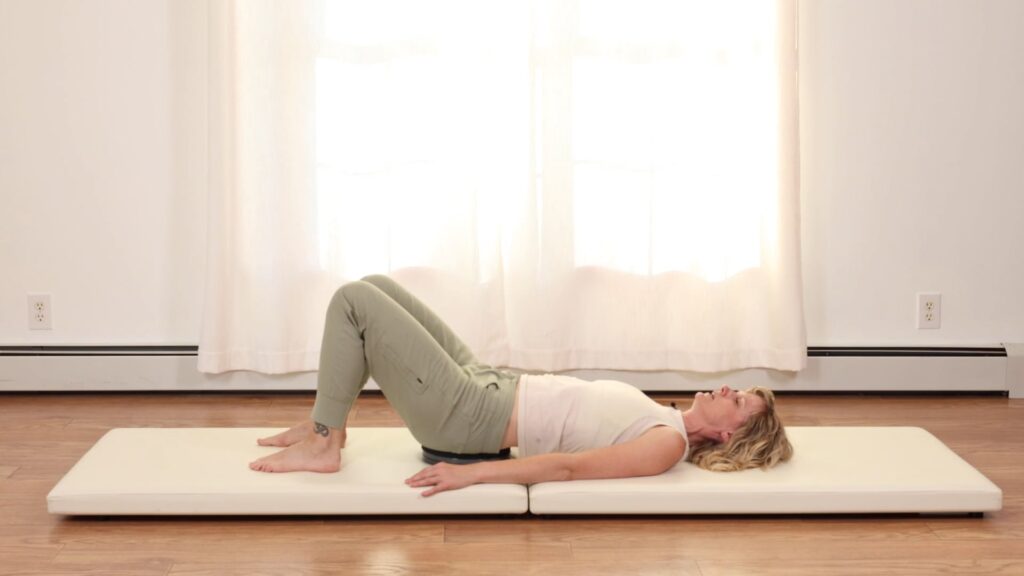
Place a half-deflated small ball under your pelvis. By lying on an unstable surface, your body’s need to create internal stability increases.
Verbal Cueing + Imagery
Imagine your pelvis as a pot with a spout. You rotate the spout in one direction and then in the other.
Imagine not using any muscles at all.
Use less effort.
Imagine your pelvis rolling around the head of your thigh bone in your hip socket.
Self-Tactile Cues
Place your thumbs on your low ribs and your pinky fingers on your hip bones. Shorten one side, return to an equidistant position, then shorten the other side.
Hands-On Cues
Wrap your hands around the sides of your student's pelvis and assist the pelvis into this rotating movement. Initially, ask your client not to help, just to feel the movement without interfering with her patterns.
Workout Planning
Prepare For This Exercise With
ROTATOR DISCS Pelvic Clock: Spinning
LARGE BALL Pelvic Clock: hip hiking | seated version
Q&As
Can you help me improve my cueing of Pelvic Clock?
Pelvic Clock: Spinning
01:48
Pelvic Clock: Spinning
02:22
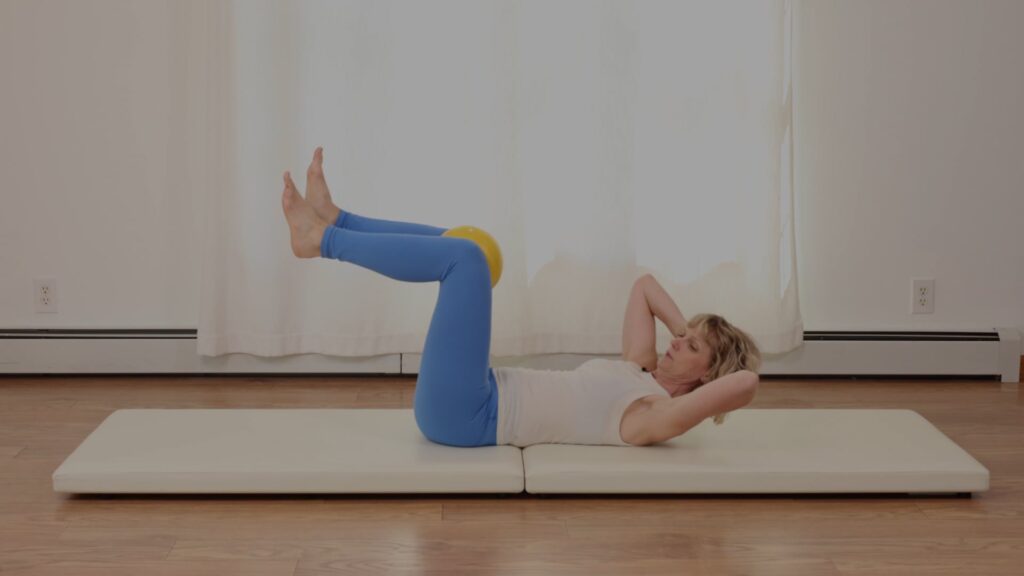
Oblique Chest Lift with Small Ball
03:26
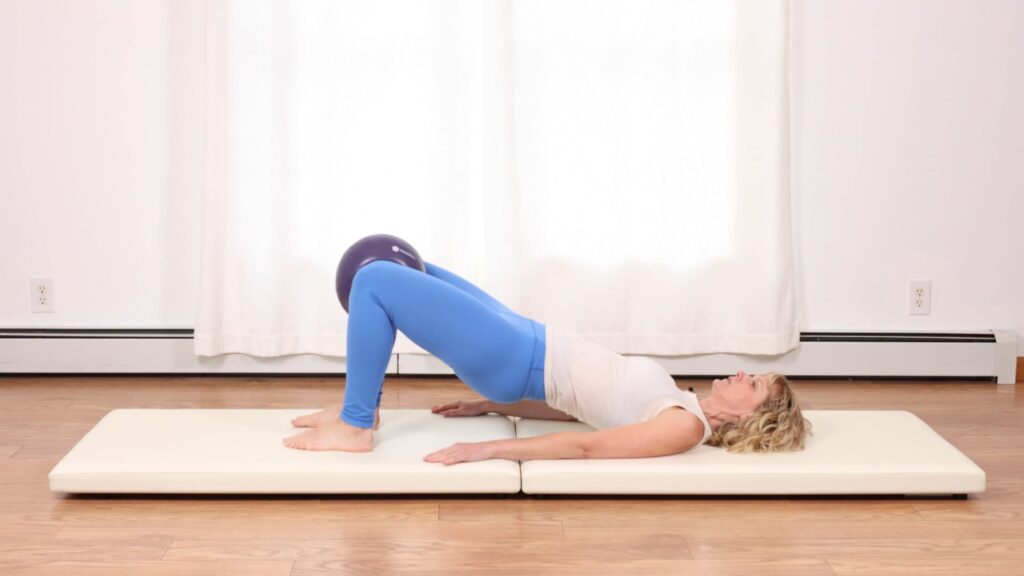
Bridging with Small Ball
03:39